








About This Service
Define Work on the Surround
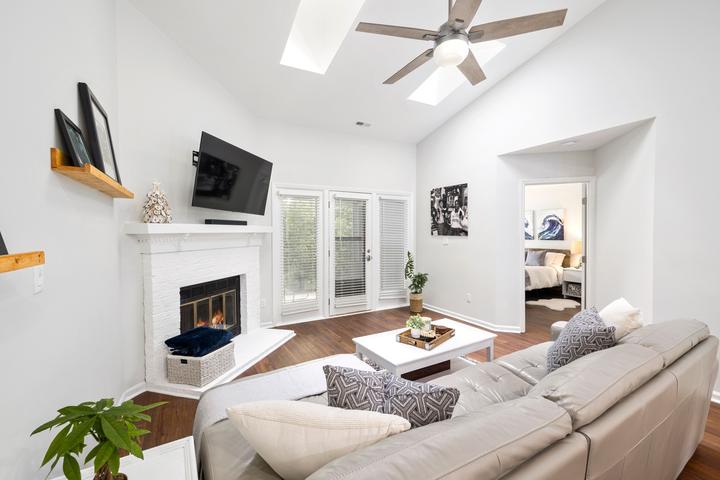
A loose facing tile or damaged mantel can be a distinct project from repairing the firebox. The condition and attachment of decorative material still deserve assessment, particularly where movement or heat damage is visible.
Explain whether you want the appearance retained or changed. Twin separates the proposed finish repair from any work needed on the functioning fireplace.
Assess Damage Near the Top of the Opening
Cracking or loose material across the upper fireplace opening can involve facing, joints or supporting construction. Appearance alone does not define the structural significance.
Keep the area unused if movement or falling material is suspected. The scope should identify the affected component and any separate structural assessment needed before a finish repair.
Do Not Hide Signs of Movement With a Finish
A crack that returns, displaced masonry or a visibly moving part can require more investigation than a cosmetic patch. A photograph cannot establish that the surrounding construction is stable.
The assessment should explain whether a localized repair is supported or another professional needs to evaluate the structure. Keep clear of unstable material while that is arranged.
Match a Repair Quote to the Reported Finding
A brief summary can omit the location or limits of an earlier inspection finding. Share the complete available report so the next proposal addresses the same concern.
Ask which finding each repair resolves and which items remain outside the scope. Repair work and any documentation required by another party should be agreed separately.
Describe Both Sides of a See-Through Fireplace
A see-through fireplace is one appliance with more than one viewing side. Tell Twin which side has the damaged component and whether access is available from both rooms.
Changes to one face must respect the complete installation. An indoor see-through model should not be treated as an indoor-outdoor unit without the appropriate product approval.