







About This Service
Include Safe Access in the Plan
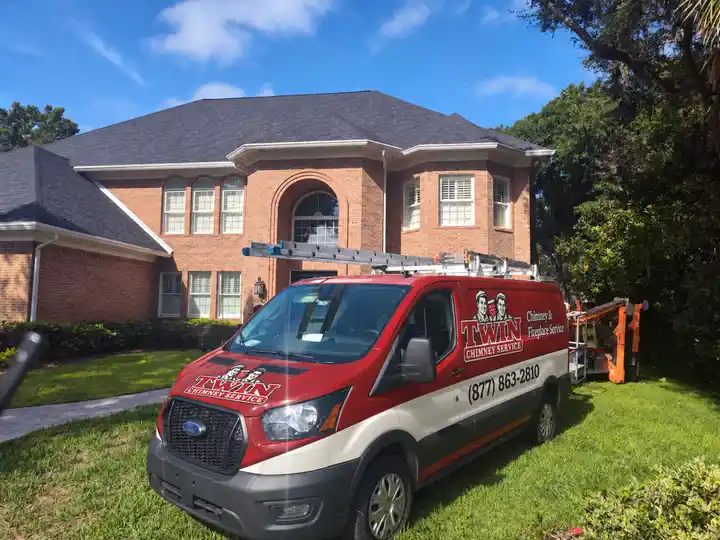
Chimney position, roof shape and access restrictions affect the replacement plan. Mention locked access or other constraints when scheduling. Twin plans the elevated work and discusses any effect on scope before approval; homeowners should not remove the old cap or prepare the roof.
Recognize a System-Specific Termination
A factory-built chimney may use a termination designed for its complete assembly. An ordinary masonry cap is not a default substitute. The installed system’s identification and instructions must establish the replacement, including which surrounding components can remain.
Compare Material and Product Suitability
Stainless steel, copper and other cap materials may be offered in different product lines. Material preference does not settle fit or system compatibility. Compare the complete specified product and installation rather than treating the metal name as a universal quality or lifespan guarantee.
Set Expectations for the Finished Appearance
A new cap may differ in color or profile from an older weathered fitting. Discuss the desired appearance before selection, while keeping product suitability first. Exact visual matching should not be promised where the old fitting is unidentified or no longer available.
Separate Weather Protection From Readiness to Use
Replacing a missing cap may protect an appropriate outlet, but it does not establish the condition of the passage or fireplace below. If the system has been unused or its maintenance history is unknown, raise that separate question before planning the next fire.