






About This Service
Compare Joint Repair with Brick Replacement
An open mortar joint and a brick with a damaged face are separate findings. Reworking joints does not restore a missing brick face, and replacing one brick may not address neighboring deterioration.
Ask for the affected areas to be described in the estimate. The materials and method need to suit the firebox construction; a surface coating should not conceal uncertainty about what is being repaired.
Trace Staining Before Restoring Finishes
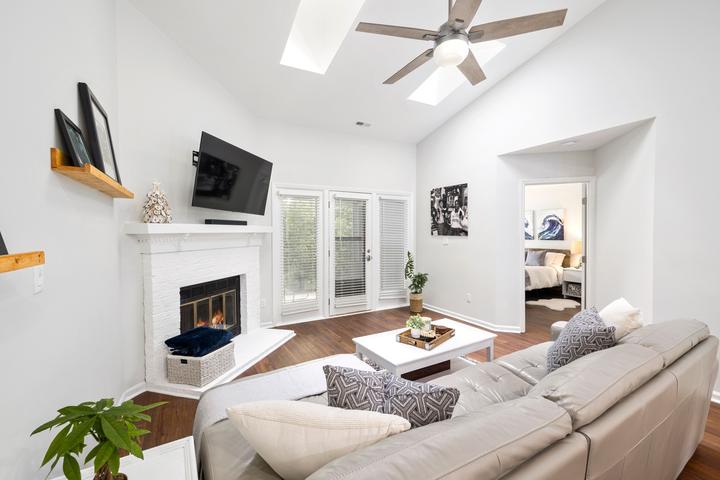
Water staining around a fireplace can start outside the room. Repainting or replacing the surround may improve appearance while leaving the water-entry concern unresolved.
Tell us when moisture appears and whether there was recent roof or chimney work. Twin can separate leak assessment from the restoration of material already damaged indoors.
Check the Attachment of Loose Facing
A loose stone or tile near the opening can pose a falling-material concern even when the fireplace still operates. Keep people away from the affected area and leave removal to the visit.
The assessment should identify the facing and accessible backing, then explain removal, attachment and any finish matching included in the work.
Separate a Draft Complaint From a Closure Repair
Cold air at a fireplace can prompt a damper request, but the complaint alone does not confirm which component needs work. The installed system and required exhaust path matter.
Do not block an opening to experiment. Twin can review the existing closure, describe the finding and explain which operating or building concerns remain outside a component repair.
Match a Repair Quote to the Reported Finding
A brief summary can omit the location or limits of an earlier inspection finding. Share the complete available report so the next proposal addresses the same concern.
Ask which finding each repair resolves and which items remain outside the scope. Repair work and any documentation required by another party should be agreed separately.